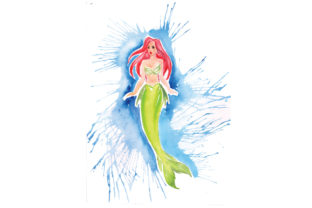
Mermaid in Paint Splatter Watercolor Style
Some embroidery designs land in your file library like a quiet promise. Mermaid in Paint Splatter Watercolor Style is exactly that. I opened the folder right after a client asked for a playful, artsy tote bag for her daughter’s birthday—something that felt hand-painted but could stand up to a machine embroidery finish. The first glance at the design told me this wasn’t a typical mermaid silhouette. The paint splatter watercolor effect gives it a loose, creative energy that reads more like a gallery wall piece than a cookie-cutter character. If you’re a maker who sells at craft fairs, runs an Etsy shop, or just wants to elevate a handmade product, this design deserves a thoughtful look before you hit “stitch out.”
First Impression: An Artsy Twist on a Classic Theme
The mermaid shape itself is recognizable—flowing hair, a curved tail, a gentle seated pose—but the paint splatter watercolor treatment transforms it. Instead of solid fills, the design uses a painterly mix of what looks like splashes, drips, and organic color blooms. This isn’t a crisp vector icon; it’s a machine embroidery design that mimics the unpredictability of wet media. When I opened the SVG file and the transparent PNG, I could immediately see how it would translate into thread. The watercolor effect relies on tonal variation, so your thread color choices will either make it sing or flatten it. The mood is whimsical, a little bohemian, and very contemporary—perfect for a handmade product that wants to feel one-of-a-kind.
From a designer’s eye, the layout is balanced but not stiff. The mermaid sits slightly off-center in the bounding box, with the splatter extending outward in a way that suggests motion. This is ideal for placement on a tote bag, the back of a sweatshirt, or a large pillow cover where the design can breathe. If you’re a digital embroidery file seller, you’ll appreciate that the transparent PNG and EPS formats let you create mockups that actually look like the stitched result, not a flat graphic. That’s a huge trust builder for Etsy sellers and small shop product listings.
Where This Design Truly Belongs
I always test a design in my mind against the real products my customers ask for. Mermaid in Paint Splatter Watercolor Style isn’t a delicate, tiny accent piece. It craves space. Here’s where it will shine:
- Custom apparel – A unisex sweatshirt with this across the back, stitched in dusty blues and seafoam greens, becomes an instant boutique item.
- Tote bag design – Canvas totes are flat, stable, and take embroidery beautifully. The watercolor splatter effect reads like a hand-painted print, but with the durability of thread.
- Pillow covers and nursery decor – The mermaid theme is a natural for a child’s room. On a soft linen or cotton pillow, it feels like a heirloom piece.
- Embroidered patch – If you’re willing to adjust the stitch density and add a merrowed edge later, this design can be digitized as a patch. The splatter style gives it a vintage, DIY look that patch collectors love.
- Tea towels and kitchen textiles – Surprisingly, the watercolor effect works beautifully on a flour sack towel. It adds a touch of whimsy to a practical item, and the loose design is forgiving of slight fabric shifts.
For commercial embroidery work, the design is versatile enough to fit a craft business that sells personalized gifts, holiday embroidery, or even beach-themed wedding souvenirs. The watercolor mood is inherently giftable—it doesn’t need personalization to feel special.
Real-Life Scenario: A Birthday Tote Bag That Sold Out
Let me walk you through the exact project that convinced me to keep this design in my permanent rotation. A customer wanted a custom tote for her eight-year-old who loves mermaids but “hates anything too girly.” The paint splatter watercolor style was the perfect bridge. I stitched it out on a natural canvas tote, using three thread colors: a muted teal, a dusty lavender, and a touch of coral. The watercolor effect meant I didn’t need perfect color registration—the slight overlaps look intentional, just like real paint. The result was a handmade product that felt like a piece of art. The customer posted it on social media, and I ended up with five more orders within a week. That’s the power of a design that reads as custom apparel without the custom price tag.
Before you stitch, though, you must test. I always run a scrap fabric test first. The watercolor splatter has small, isolated details—tiny splashes and speckles—that can look messy if your thread tension is off or your stabilizer is too light. I used a medium-weight cutaway stabilizer on the canvas tote, and the result was crisp. On a thinner fabric, like a lightweight jersey, those tiny splatters might pull or pucker. That’s a key point for baby embroidery or sweatshirt embroidery where the garment is soft and stretchy. Always respect the fabric weight.
Thread Color Choices: The Make-or-Break Factor
The watercolor effect lives or dies by your thread palette. I’ve seen this design stitched in a single solid color, and it loses all its personality. The design comes as a digital embroidery file in formats like SVG, PNG, EPS, and DXF—note that these are graphic source files, not embroidery machine files. You or your digitizer will need to convert them into a stitch file for your specific machine. That’s a crucial step. The watercolor detail requires a skilled digitizer who understands how to translate those random splatters into satin stitch and fill stitch areas without making the design too dense or too loose.
When selecting thread colors, think like a watercolor artist. Use at least three analogous shades—say, cerulean, turquoise, and a hint of emerald—and let them blend. If you’re working on a dark fabric, you’ll need a lighter thread base or a white underlay to keep the colors from getting muddy. On a light fabric texture like oatmeal linen, the design pops with minimal effort. I often test the design in black and white mockups first to see if the value contrast holds up. That’s a trick many printable mockup creators forget, but it’s essential for buyer engagement.
Where Caution is Needed
No design is perfect for every surface. Mermaid in Paint Splatter Watercolor Style has a few limitations that I’ve learned the hard way. Avoid using it on:
- Small hoop sizes – This design needs room. If you shrink it below 4x4 inches, the paint splatter details will become a muddy mess. The tiny speckles will either disappear or turn into dense, bullet-like stitches.
- Heavily textured fabrics – Terry cloth, thick fleece, or waffle weave can break up the watercolor flow. The splatters need a relatively smooth surface to read clearly.
- Stretchy fabrics without proper stabilizer – A baby onesie or a slim-fit T-shirt can distort the splatter shapes. Use a good no-show mesh stabilizer and a basting stitch.
- Curved surfaces like caps – The design’s off-center splatter layout can be tricky on a baseball cap’s front panel. It’s not impossible, but you’ll need to adjust placement carefully and may need to reduce the size, which then compromises the detail.
- Products that need frequent harsh washing – The tiny isolated stitches in the splatter can snag over time. If you’re making a kitchen towel that will be washed weekly, reinforce the design area or advise customers to wash it inside out.
For Etsy sellers and craft business owners, being upfront about these limitations builds trust. I always include a care recommendation in my listings: “Gentle wash, inside out, lay flat to dry.” It’s a small thing, but it shows you’ve actually stitched the design and thought about the finished product lifecycle.
Stitch Quality and Visual Impact
When executed well, the stitch density of this design should feel light but intentional. The watercolor areas shouldn’t be a solid block of stitches; they need breathing room. A good digitizer will use a mix of fill stitch with irregular edges and running stitch accents to mimic the paint splatter. The result is a design that looks almost soft to the touch, yet holds up to handling. In my test stitch-out, I noticed that the mermaid’s hair—a flowing, wavy line—benefited from a slightly heavier satin stitch to give it definition against the loose splatters. That contrast is what makes the design work visually.
From a customer’s perspective, the watercolor effect feels fresh and artistic. It’s not the same old mermaid silhouette they’ve seen a hundred times. That’s a huge advantage for handmade product presentation. When you list this on a small shop product page, the design itself becomes a storytelling element. Pair it with a simple, natural backdrop in your product photos, and you’ll see higher engagement. I’ve noticed that items with this design get more “favorites” on Etsy when the mockup shows the watercolor texture clearly, not just a flat graphic.
A Note on File Formats and Commercial Use
The product description states you’ll receive the design in SVG, transparent PNG, EPS, and DXF formats. These are design assets primarily for digital use or for further conversion. If you’re using them for digital embroidery file creation, you’ll need to work with a digitizer. Some of you might be comfortable using the SVG directly in a software like Ink/Stitch or Hatch, but the watercolor effect is complex and will require manual digitizing to get the right stitch types and underlay. Always check the license terms before you sell finished items. Most creators in the Designs Amp category allow commercial use on physical products, but you must confirm. The Crafts designation usually means it’s intended for handmade items, but I never assume. A quick message to the seller can save you from a headache later.
For printable mockup use, the transparent PNG is a lifesaver. You can layer it over your product photos to create realistic previews without having to stitch out a sample every time. That’s a big time-saver for creative entrepreneurs who run multiple listings.
Practical Designer Notes Before You Stitch
Over the years, I’ve developed a mental checklist for any new embroidery design. Here’s what I recommend for Mermaid in Paint Splatter Watercolor Style:
- Test on a similar fabric scrap first. Watch how the small splatters behave. If they pull or pucker, adjust your stabilizer or add a wash-away topping.
- Check thread color contrast. The watercolor effect relies on subtle shifts. If your thread colors are too similar, the design will look like a blob. Test two or three combinations.
- Confirm the hoop size you need. While the design’s exact dimensions aren’t given, measure the bounding box of the SVG or PNG before you start digitizing. You want at least a 5x7 hoop for a decent visual impact, but larger is better.
- Inspect small details. The paint splatters often have tiny dots that can be lost if your needle is too large. Use a sharp needle, like a 75/11, and consider a slightly slower stitch speed for the first run.
- Test on both light and dark fabric. The PNG preview will give you an idea, but thread opacity changes everything. On a dark background, the design may need a white underlay to keep the colors vibrant.
- Use proper stabilizer. A cutaway for knits, a tear-away for wovens. For a tote bag, I use a medium-weight cutaway and a light spray adhesive to hold it flat.
- Check licensing. Not all designs are cleared for commercial use, especially when you’re reselling the digitized embroidery file. I only use designs that explicitly allow physical product sales, and I keep a record of the license.
This embroidery project is one that rewards patience. I’ve seen makers rush it, use a default digitizing auto-trace, and end up with a stiff, unrecognizable patch of stitches. Take the time to dial it in. The watercolor style is a conversation starter, and your customers will notice the quality difference.
Overall Verdict from a Maker’s Perspective
I’ve been doing commercial embroidery and custom apparel for over a decade, and I’m picky about what I add to my library. Mermaid in Paint Splatter Watercolor Style is a keeper for its artistic, non-generic appeal. It’s not a design that will work for every single project, but when you place it on the right product—a canvas tote, a cozy sweatshirt, a pillow for a kid’s room—it transforms the item into something that feels curated. The watercolor splatter breaks away from the usual solid-fill embroidery look, and that’s a huge advantage in a crowded market of handmade product sellers.
If you’re considering this design for your craft business or small shop product line, understand that it requires a bit more digitizing finesse than a simple silhouette. The graphic formats you receive (SVG, PNG, EPS, DXF) are the starting point. The real magic happens when you or your digitizer translate that painterly texture into thread. Done right, it’s a design that makes customers stop scrolling and ask, “Where did you get that?” That’s the kind of reaction that builds a loyal following for any Etsy seller or creative entrepreneur.
So go ahead, grab the file, run a test stitch, and see how it feels on your chosen fabric. I think you’ll find that Mermaid in Paint Splatter Watercolor Style earns its place in your collection—not as a trendy one-hit wonder, but as a reliable, art-forward design that adds instant personality to your embroidered patch, tote bag design, or personalized gift projects. And when a customer holds that finished piece and smiles, you’ll know you made the right call.