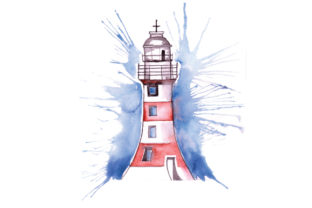
Lighthouse in Paint Splatter Watercolor Style
When I opened Lighthouse in Paint Splatter Watercolor Style, I knew it wasn’t meant for crisp, traditional appliqué. This is an artistic, softly moody piece — a lighthouse silhouette wrapped in loose paint splatters and watercolor washes. The mood is quiet, coastal, and romantic, exactly the kind of visual that boutique shoppers and handmade gift buyers gravitate toward. You get the files in SVG, transparent PNG, EPS, and DXF. For embroidery designers, the SVG and EPS are the key assets. They give you clean edges to digitize, while the transparent PNG is perfect for mockups and Etsy listing photos. Since this is a digital art pack from Designs Amp in the Crafts category, you’ll need to bring it into your digitizing software and create the embroidery file yourself — standard practice for creative entrepreneurs who want full control.
A Watercolor Lighthouse That Feels Alive
The first thing I notice is how the paint splatter softens the lighthouse. Instead of a rigid beacon, you get a hand-painted, almost windswept silhouette. The watercolor elements bleed into each other, and the splatters suggest sea spray. It’s not hyper-detailed — it’s a mood. That’s important because embroidery will simplify the subtle watercolor transitions. Embrace that softness and don’t try to force every tiny speck. The vertical layout rises from a rocky base, with splatters scattered around the tower. That makes it a natural fit for tall items like tote bags, kitchen towels, or the back of a denim jacket. In a 5x7 hoop it feels balanced, but I’d avoid anything smaller than 4x4 — the splatter details would compress into dense, messy blobs.
Stitching the Splatter: A Real Tote Bag Project
Let me walk through a real scenario. I’m preparing a coastal-themed canvas tote bag for a craft market. The fabric is medium-weight natural cotton, and I want something that feels organic, not touristy. Lighthouse in Paint Splatter Watercolor Style fits perfectly. I’d digitize with a mix of satin and light fill stitches, using smoky blue, weathered gray, and a touch of warm ochre. The splatters can be interpreted as scattered running stitches or small, low-density fill areas. On a tote, the watercolor texture translates beautifully. A cutaway stabilizer keeps the canvas stable, and I’d enlarge the splatters slightly so they read as intentional art, not thread breaks. The goal is for customers to see a hand-painted vignette, not a technical flaw. That’s the kind of craft business product that builds repeat buyers.
Where This Design Belongs
This lighthouse design shines brightest on art-driven, flat-surface products. Here’s where I’d use it without hesitation:
- Canvas tote bags and market totes — the watercolor effect loves natural fibers.
- Pillow covers and linen cushions — a single focal point on a 16×16 cover creates a cozy coastal vibe.
- Kitchen towels and tea towels — the vertical layout hugs the length perfectly.
- Framed hoop art and nursery decor — the soft, painterly feel works in a beach house or child’s room.
- Custom sweatshirts — on the back of a crewneck, it becomes a wearable statement.
- Boutique branding and small shop merchandise — the design adds a signature, handmade touch.
For Etsy sellers and digital product creators, the transparent PNG alone is a huge asset. You can build printable mockups, listing photos, and sublimation previews without stitching first. The SVG and EPS give you the freedom to scale and tweak before digitizing, which is a major plus for commercial embroidery projects.
Where Caution Is Required
This design isn’t a one-size-fits-all solution. The watercolor splatters and soft edges demand thoughtful handling, especially on certain fabrics and surfaces:
- Small hoop sizes — 4×4 is too tight. The splatters and lighthouse details will blob together.
- Dark fabrics — the airy watercolor washes lose depth on black or navy. A white underlay or thread color adjustment is essential.
- Highly textured fabrics — terry cloth or chunky knit will swallow the splatters. Stick to smooth, flat weaves.
- Stretchy garments — thin t-shirts can pucker around the fill areas. Use a no-show mesh stabilizer and a topper for the splatters.
- Curved surfaces like caps — the vertical composition warps on a cap. The splatters look off-center. Keep it flat.
- Frequent washing — small splatter elements may fray without a secure underlay. Test a sample through several wash cycles.
How It Elevates Product Value and Customer Trust
When a buyer sees a finished piece with this design, they’re not just seeing a lighthouse. They’re seeing an artistic choice that signals handmade care. A simple sweatshirt becomes a boutique item. A tote bag feels like a limited-edition find. The watercolor origin tells customers the maker values artistry, not just speed. That builds trust, especially on platforms like Etsy where uniqueness wins. For small shop owners, this design helps you tell a coastal story without falling into cliché. It’s not another anchor or sailboat — it’s expressive and memorable, which boosts brand recognition and repeat sales.
Practical Embroidery Designer Notes
Before you stitch, run through this checklist. It will save you from wasted fabric and frustrated customers:
- Test on scrap fabric first. The splatters will look different in thread. Run a sample and pay attention to the watercolor transitions.
- Check thread color contrast. Subtle shifts are key. Too similar, and the design goes flat. Too harsh, and the splatters feel aggressive.
- Review stitch density. Dense paint splatters can become stiff mini-satins. Lighten the fill and use overlapping running stitches where possible.
- Confirm hoop size. The file formats don’t state dimensions. Open the SVG or EPS and measure. Most watercolor designs in this style run tall, but verify.
- Test in black and white mockups. Convert to grayscale to see if the value structure holds. If the splatters disappear, they’ll be weak on dark fabric.
- Use proper stabilizer. For totes and towels, cutaway is non-negotiable. For garments, a fusible no-show mesh keeps the design stable without stiffness.
- Check licensing. The listing provides SVG, PNG, EPS, DXF. Usually that means you can use the design for finished products, both personal and commercial. But confirm the terms before selling items. If you plan to resell the digital file, you’ll need an extended license — don’t assume.
An Artistic Piece That Earns Its Place
I’ve worked with hundreds of embroidery designs, and Lighthouse in Paint Splatter Watercolor Style is one of those rare finds that blends art and craft seamlessly. It’s not a quick-stitch pattern — it asks for a little digitizing love and testing. But the payoff is a finished product that feels deeply personal and undeniably beautiful. Whether you’re stitching a custom wedding gift, building a line of boutique home decor, or adding a statement piece to your own wardrobe, this design gives you the raw material to create something that doesn’t look mass-produced. For embroidery designers, small business owners, and makers who turn digital art into stitched stories, this lighthouse is a quiet, powerful addition to your collection.