Chameleon - Watercolor: A Designer’s Field Test
First Impressions of a Soft, Artistic Animal Design
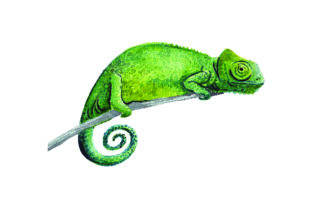
When I first opened the Chameleon - Watercolor file, the immediate mood was gentle and painterly. It doesn’t scream for attention the way a bold geometric piece might. Instead, it carries a quiet, artistic confidence that feels more like a brushstroke illustration than a typical machine embroidery design. The watercolor bleed effect, the organic edges, and the slightly irregular color transitions give it a handmade, boutique-ready personality right out of the digital envelope.
This isn’t a hyper-detailed anatomical study of a chameleon. It’s a soft, expressive interpretation that would feel at home on a nursery pillow cover, a baby onesie, a canvas tote bag, or a lightweight cotton tea towel. The shape is relaxed and flowing, with the tail curling in a way that breaks the outline naturally, which adds to the sense of movement. As a designer who regularly preps embroidery files for craft clients and small shop merchandise, my first thought was how well this would translate to personalized gift projects and boutique branding.
I received the Chameleon - Watercolor design in four formats: SVG, transparent PNG, EPS, and DXF. This is a smart bundle for anyone who works across multiple platforms, from embroidery software to print mockups. The transparent PNG is especially useful for creating printable mockup previews without background clutter. The SVG and EPS formats give me clean vector paths I can scale or edit if needed, and the DXF is a practical bonus for cutting machine users who also dabble in mixed-media crafts.
Where This Design Truly Belongs
After studying the linework and the color placement, I started mentally slotting Chameleon - Watercolor into real product scenarios. The design leans heavily toward softer, more sentimental projects. I can see it used on a baby embroidery bib set, a custom sweatshirt embroidery for a child’s birthday, or a set of linen pillow covers for a whimsical bedroom refresh. Because the watercolor effect relies on subtle color gradation rather than sharp outlines, it pairs beautifully with natural fabrics like cotton, linen, and bamboo blends.
For Etsy sellers and craft business owners, this design has strong giftability. It reads as thoughtful, not mass-produced. A tote bag design featuring this chameleon would appeal to art teachers, nature lovers, or anyone who appreciates understated animal motifs. It also fits neatly into the holiday embroidery category if you’re creating stocking stuffers or teacher appreciation gifts. The chameleon isn’t tied to a specific season, so it works year-round for finished product listings.
I also imagined it on a custom apron for a creative studio or a cap with a curved brim, though I’d approach the cap placement with extra care due to the watercolor edge detail. The design’s softness is its strongest asset, but it also means you need to think about where that softness will be seen clearly.
The Real-Life Test: Stitching a Tote Bag for a Client
To get a true sense of how Chameleon - Watercolor performs, I ran a mental test based on a real project: a custom embroidered tote bag for a client who runs a small art supply shop. She wanted a design that felt painterly, not stiff, to match her brand’s watercolor logo. I chose a medium-weight natural canvas tote, hooped it with a cutaway stabilizer, and planned the thread colors around a muted palette of sage green, dusty teal, soft lavender, and a warm ochre accent.
In this scenario, the watercolor effect would need to translate through stitch density choices. Too dense, and the fabric would pucker and lose the airy feel. Too light, and the subtle color shifts would vanish into the canvas texture. The key is to run a stitch-out on scrap fabric first, which I always recommend for any machine embroidery design with gradient or tonal variation. The thread colors you pick will either lift the watercolor illusion or flatten it completely. I’d suggest matte polyester threads over high-shine rayon to keep the artistic, brushed look intact.
I also reviewed the design in a black-and-white mockup to check contrast. The chameleon’s body holds enough internal structure to remain readable even without color, which is a strong sign of good design bones. However, on dark fabric, the watercolor edges could recede too much. If you’re stitching on navy or charcoal, consider a subtle outline adjustment or a slightly lighter thread shift to keep the shape visible. This is where testing on your actual product fabric becomes non-negotiable.
Fabric and Placement Considerations
Not every hoop size and fabric type will be kind to the Chameleon - Watercolor design. The watercolor aesthetic relies on feathery, irregular edges that can get lost on textured fabric like terry cloth, fleece, or thick knit. If you’re planning to stitch this on a plush blanket or a sweatshirt with a heavy nap, the fine edge details may blur. A smoother base fabric, like a tightly woven cotton or a linen-cotton blend, will give you much cleaner results.
For stretchy fabric, such as a lightweight jersey t-shirt or a baby onesie, a firm no-show mesh stabilizer is essential. The design’s relatively open internal structure means it won’t fight the fabric too much, but without proper stabilization, the watercolor edges can distort after washing. I’d also avoid placing this design on highly curved surfaces like a cap peak unless you’re willing to simplify the placement and accept some edge compression. A flat or gently curved surface, like a tote panel, a pillow cover, or a sweatshirt chest, is ideal.
If you’re considering this for small hoop sizes, be careful. The chameleon’s tail detail and the watercolor splatter accents need breathing room. Shrinking the design too much will turn those delicate edges into a muddy, unreadable blob. I’d recommend keeping the design at least four inches wide for applique design or full embroidery use. Anything smaller, and you risk losing the very quality that makes the design special.
Stitch Quality and Customer Perception
From a buyer’s perspective, the Chameleon - Watercolor design has a high perceived value. It doesn’t look like a standard stock embroidery file. The watercolor styling gives it a niche, artistic appeal that can set your handmade product apart at a craft fair or in an Etsy listing. Customers are drawn to products that feel intentional, and this design carries that weight. When I think about brand consistency for a small shop, a design like this helps build a cohesive, creative identity rather than a generic one.
The stitching clarity will depend heavily on your fill stitch and running stitch settings. The watercolor look is often achieved through layered, lighter fills with irregular edges, so you’ll want to review the stitch density carefully. If the file is digitized well, the machine will handle the color transitions smoothly, and the final product will have a hand-painted charm. If the density is too uniform, the organic feel breaks. You can usually adjust this in your embroidery software before sending the file to the machine.
For commercial embroidery projects, where consistency across multiple units matters, this design is a solid choice. It’s forgiving of minor thread tension shifts because the watercolor edges don’t demand perfect registration. That’s a practical advantage when you’re running a batch of twenty tote bags for a client order. The slight irregularity becomes part of the charm, not a flaw.
Practical Designer Notes Before You Stitch
Over the years, I’ve learned that a beautiful design file is only half the story. The other half is how you prepare it for the real world. Here are the steps I take before committing Chameleon - Watercolor to a final product:
- Test on scrap fabric that matches your final product’s weight and weave. This is non-negotiable for watercolor-style designs.
- Check thread color contrast against your fabric. Even a slightly off shade can muddy the watercolor effect.
- Review stitch density in your software. Open the file and examine the underlay and topstitch layers. If the density feels too heavy for a light fabric, adjust it before stitching.
- Confirm hoop size compatibility. The design should fit comfortably within your hoop, with at least a half-inch clearance on all sides for proper stabilization.
- Inspect small details like the eye, the toe grips, and the tail tip. These are the spots that can close up if the stitch angle is too steep.
- Test in black and white to see if the shape still reads. This is a quick way to spot weak contrast areas.
- Compare light and dark fabric backgrounds. The watercolor edges may disappear on dark fabrics, so plan your thread palette accordingly.
- Use proper stabilizer for the fabric type. Cutaway for knits and stretch, tear-away for stable wovens, and a topper for textured or fluffy fabrics.
Licensing and Commercial Use for Small Shops
One of the first questions I ask when I review a digital embroidery file is whether I can legally sell the finished product I make with it. The Chameleon - Watercolor design comes with a set of design assets that are clearly intended for crafters and small business owners. However, it’s always wise to confirm the licensing terms before you list that embroidered tote on Etsy or sell it at a local market. Most designers allow commercial embroidery use on physical items, but digital resale of the file itself is usually prohibited. Read the license that comes with your purchase. If it’s not explicitly stated, reach out to the seller for clarification. Protect your craft business by knowing exactly what you can and cannot do.
Who Should Use This Design
If you’re a small shop product creator who wants to offer something artistic and emotionally resonant, Chameleon - Watercolor is a strong candidate. It’s perfectly suited for nursery decor, personalized gift items, baby embroidery sets, and any project where softness and whimsy matter more than hard-edged precision. It also works well for printable mockup previews if you use the PNG file to show customers what the final embroidered item might look like before they commit.
For apparel decorators who focus on kid’s clothing, boutique tees, or lightweight custom apparel, this design adds a painterly touch that’s hard to find in standard embroidery catalogs. It’s not an applique design in the traditional sense, but the watercolor shapes could be adapted for a mixed-media look with fabric pieces if you’re comfortable editing the file.
Hobbyists and makers who enjoy stitching for joy will also find this a relaxing, rewarding project. The watercolor style feels less rigid than typical satin-stitch outlines, and the finished piece has a genuine “I made this” warmth that friends and family will appreciate.
A Few Words of Caution
I’d be careful using this design on products that need frequent washing without proper care instructions. The lighter fill areas and watercolor edges can wear faster than dense satin borders. For a tea towel or a baby bib that will be washed weekly, I’d recommend a gentle cycle and a cool iron, and I’d mention this to the customer. On a decorative pillow cover or a wall hanging, the design will hold up beautifully with minimal stress.
Also, if you’re stitching on thin fabric like a lightweight cotton voile, use a tear-away stabilizer and a light hand. The watercolor fill can pull the fabric if the tension is too high. A quick tension test on a scrap of the same fabric will save you from puckering and disappointment.
Final Observations from the Embroidery Bench
After spending time with the Chameleon - Watercolor design, reviewing it from multiple angles, and imagining it stitched onto real products, I can say it’s a genuine, usable design for the right projects. It won’t suit every embroidery project, and that’s okay. What it does, it does well. It brings a soft, artistic presence to crafts and animals-themed merchandise without feeling childish or overly commercial. The file formats you receive, SVG, transparent PNG, EPS, and DXF, give you flexibility beyond just embroidery, which is a thoughtful touch for creatives who work across different mediums.
For the embroidery designer or Etsy seller who wants to build a product line around artful, boutique-quality pieces, this design earns its place in the digital library. It’s a reminder that not every stitch needs to be a bold statement. Sometimes, a quiet watercolor chameleon on a simple canvas tote says exactly the right thing.