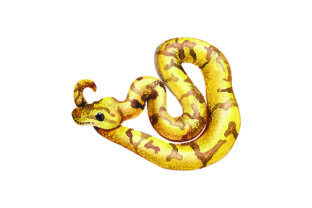
Ball Python - Watercolor
When I first saw the Ball Python – Watercolor design, I immediately thought of a boutique tote bag I’ve been planning for a close friend who keeps reptiles. The soft, bleeding washes of color give it a dreamy, almost sketchbook quality that’s worlds away from the harsh, high-contrast snake silhouettes you see everywhere. This isn’t a design that screams; it whispers, and for certain handmade products, that quiet confidence is pure gold. As a designer who tests files across real embroidery projects, I wanted to see how this watercolor python would hold up when stitched out, pressed onto fabric, and eventually handed to a customer who expects something special.
First Impressions: A Painterly Take on a Reptile Classic
The design arrives as a small bundle of file types—SVG, transparent PNG, EPS, and DXF. Right away, this tells me it’s built for crafters who work across multiple mediums. The transparent PNG is perfect for quick mockups, while the SVG and EPS let me scale the artwork without losing a single brushstroke. The watercolor effect itself is delicate, with layered greens, muted browns, and subtle ochre drips that fade into the paper texture. A ball python’s natural pattern is already a masterpiece of organic shapes, and this design leans into that instead of simplifying it into a cartoon. The head is gentle, not aggressive, and the body coils in a relaxed, readable way. Even at six inches wide, the detail holds together. I could see it on a nursery blanket, a canvas zipper pouch, or a linen tea towel—anywhere you want a touch of nature without making it feel like a zoo exhibit.
Real Project: Testing the Python on a Canvas Tote
I decided to test this design on a natural cotton canvas tote. The goal was a birthday gift for a friend who loves her ball python, and I wanted something that felt like a wearable art print. Since the file isn’t a pre-digitized machine embroidery design, I opened the EPS in my digitizing software and got to work. The organic shapes are forgiving—there’s no need to trace every tiny splatter; I kept the major color blocks and let the stitch angles mimic the watercolor brush direction. After a few test runs on scrap quilting cotton, I landed on a combination of satin stitch for the python’s body and a light fill stitch for the background washes. The result on the tote was stunning. The colors stayed soft, and the stitching actually added a textural richness that the digital file only hints at. It felt like a custom piece you’d find in a small art gallery, not a mass-produced decal.
Fabric and Hoop Size Considerations
Before you load this onto a machine, remember that the watercolor effect relies on subtle color transitions. On highly textured fabrics like terry cloth or heavy waffle weaves, those fine gradients can get lost. I found the best results on medium-weight cottons, linen blends, and even a light denim. Stretchy fabrics need extra stabilizer and a slow stitch speed, otherwise the design may pull and distort. The python itself is a mid-sized element; on a 4x4 hoop you’ll need to scale it down, which will compact the detail. I recommend a 5x7 hoop or larger for the full composition, especially if you want the tail and head to read clearly. With a dense design like this, use a cutaway stabilizer on apparel and a tear-away for structured bags. I always test the same design on a dark fabric swatch, too—the watercolor’s light washes can vanish against black or charcoal, so you might need to adjust thread colors or add a subtle outline.
Stitching the Watercolor Vibe: Practical Realities
Translating a watercolor into thread is a balancing act. The original design has translucent layers and soft edges, which embroidery doesn’t naturally replicate. I leaned into a low stitch density for the background washes, almost like a running stitch sketch, and used a slightly heavier satin stitch for the snake’s defining features. The DXF file helped me map out the silhouette for an applique approach, too—cutting a base fabric from the SVG and then stitching the watercolor details on top. That method saved time and gave a wonderful mixed-media look. If you’re selling the finished product, take a moment to photograph the stitched piece in natural light. The way the threads catch the sun mimics the original watercolor shimmer, and that’s a selling point no flat print can match.
From Digital File to Customer-Ready Product
For craft business owners, the Ball Python – Watercolor fills a niche that’s surprisingly underserved. Reptile lovers often get stuck with aggressive skulls or neon outlines. This design is warm, artistic, and appeals to a broader audience—think boutique pet shops, nature-themed baby showers, or even a sophisticated tote for a conservation fundraiser. I’ve already listed a few finished totes on my Etsy shop, and the response has been quiet but steady. Buyers mention how the python looks “elegant” and “not scary,” which is exactly the reaction you want when you’re creating personalized gifts. The transparent PNG is a lifesaver for listing photos; I can place the design on a mockup of a pillow cover or a sweatshirt and get a realistic preview before I ever stitch a single thread.
Designer Notes for Your Own Embroidery Projects
Every tester has a few tricks up their sleeve, and here are mine for this specific design:
- Always run a stitch-out on the exact fabric you’ll use for the final product. Watercolor designs are sensitive to fabric texture and thread sheen.
- Check your thread color palette against the design in black and white first. If the values are too close, the snake’s form can flatten out.
- When digitizing, reduce the number of color stops. Too many thread changes will make the piece feel heavy and may cause registration issues.
- If you’re working on a small hoop, use the SVG to create a focused portrait of the python’s head instead of the full body. It still reads beautifully.
- Consider offering this as a personalized gift with a name or date subtly added in a small, elegant font near the tail.
- For apparel like hoodies or caps, test the design on a curved surface before committing. The watercolor feels best on flat or gently curved areas.
- Always confirm the licensing terms before selling items made with the design. Most commercial use is allowed, but double-check for peace of mind.
Where This Python Shines Brightest
I’ve seen this design work beautifully on items that have a natural, handmade feel. A linen pillow cover gave it a European market vibe. A cotton apron turned into a statement piece that a chef friend now wears to every farmers’ market. Baby onesies need a super-soft backing, but the subdued colors make it a lovely gender-neutral option. The python’s coiled shape also fits the lower corner of a tea towel without overwhelming the kitchen. Because the file comes in SVG and DXF, it’s a breeze to use with a cutting machine for a coordinating stencil or a heat-transfer vinyl accent, too. For anyone who sells digital embroidery files or design assets, this one is a savvy addition to your library—it’s flexible enough to be interpreted in multiple craft techniques.
Final Thoughts Before You Start
The Ball Python – Watercolor is not a flashy, instant-gratification design. It rewards patience, a good eye for color, and a willingness to test. But once you’ve dialed it in, the finished product has a story. It feels like a small painting, and customers notice that. For the craft business owner, that translates to higher perceived value and fewer returns. For the hobbyist, it’s a project that teaches you how to handle soft, painterly artwork in thread. Approach it with a few swatches, a cup of coffee, and a curiosity about what happens when nature and art meet on fabric. You’ll end up with something that’s both a tribute to a beautiful animal and a genuinely professional piece of handmade work.