Blue Ringed Octopus Watercolor: An Embroidery Designer’s Review
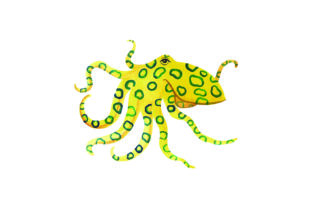
When a client slides a mood board across the table and points to a blue ringed octopus rendered in loose, bleeding watercolor, my instinct isn’t to reach for a thread chart. It’s to pause. That’s the kind of design we’re talking about here. Blue Ringed Octopus - Watercolor isn’t a typical crisp marine clipart. It’s a soft, painterly study of one of Australia’s most mesmerizing — and deceptively dangerous — creatures. As a designer who stitches on everything from baby onesies to boutique tote bags, I needed to think through whether this artwork would actually translate into a reliable embroidery file, or if it would just be a pretty screen mockup that falls apart on the hoop.
First Thread Contact: What the Design Actually Feels Like
Opening the file set — SVG, transparent PNG, EPS, DXF — I immediately noticed the watercolor wash. This isn’t a solid silhouette. The edges bleed, the pigment pools unevenly, and the iconic blue rings shimmer in various opacities. That’s a departure from what most embroidery digitizers expect. For a hobbyist looking to toss a quick patch onto a denim jacket, this might feel like a challenge. But for a craft business owner who wants a high-end, artistic look on a handmade product, it’s a quiet flex.
The first thing I did was stare at the transparent PNG in a mockup. I overlaid it on a natural linen tote, then on a charcoal sweatshirt, then on a pale baby blanket. The watercolor effect gave it a gentle, almost fine-art feel. It reminded me of a museum print, not a cartoon. That’s rare in machine embroidery design files, where most ocean-themed assets lean heavily on solid shapes and thick satin borders. The mood here is observant, thoughtful, a little moody. It feels like a tide pool at dusk.
Where This Octopus Belongs: Real Products That Make Sense
I quickly ran through my mental catalog of upcoming projects. A custom sweatshirt for a marine biologist’s birthday? Yes. A tote bag design for a coastal boutique in Western Australia? Absolutely. But not just any tote — a heavyweight canvas with a slight slub, where the texture could mimic the rough watercolor paper this art was born on. I also pictured it on a pillow cover in a beach house, or stitched in a single muted thread on a tea towel for a hostess gift. The design has a quiet elegance that works for personalized gifts in the crafts space, not just mass production.
One scenario that stuck with me: a small Etsy seller preparing a limited run of embroidered patch sets for a marine conservation fundraiser. The blue ringed octopus is unmistakably Australian, and the watercolor treatment makes it feel like a signed artist edition. That’s a selling point. The visual personality is strong enough to anchor a product line, but soft enough to layer with other elements — maybe a subtle date or a short handwritten phrase underneath.
Why It Shines on Apparel and Home Decor
For custom apparel, the organic shape avoids the stiff, emblem-like look that can make embroidery feel corporate. The tentacles curl naturally, so it sits well on a chest pocket, a sleeve, or the back of a baby embroidery bodysuit. On dark fabrics, the watercolor effect will need thoughtful thread choices — a single taupe or dusty blue on a heather gray sweatshirt could look like a lithograph. On light fabrics, a muted palette of seafoam, indigo, and rust would echo the painting’s origin. I’d avoid high-contrast neon threads; they’d fight the design’s soul.
For nursery decor or a holiday gift like a personalized blanket, this design brings a calm, storybook quality. It’s not cutesy. It’s the kind of piece a parent would keep long after the child has outgrown the crib. That’s part of its long-term value.
Stitching Reality Check: What Happens When the Hoop Drops
Now, let’s talk about the unromantic side. A watercolor design in vector format is one thing. Turning it into a machine embroidery design with proper stitch mapping is another. I don’t know the exact stitch count, and the product listing doesn’t provide a digitized embroidery file — only the graphic formats. So if you’re planning to use this on a commercial embroidery machine, you’ll need to digitize it yourself or hire a professional. That’s not a flaw; it’s a reality check. The SVG and EPS are clean starting points. The transparent PNG is perfect for printable mockups and digital product previews. The DXF could be useful for laser cutting or alternative crafting, but not for direct embroidery stitching.
For a craft business owner, the files are a raw asset. You’ll need to test the design on scrap fabric before committing to a finished product. I’d start by converting the artwork into a digitized file with a mix of satin stitch for the rings and fill stitch with varied densities to simulate the watercolor wash. A running stitch could outline the delicate tentacles without overwhelming them. The trick is to avoid making it look like a bulletproof patch. The charm is in the fragility.
Small Hoop, Big Headaches
If you’re working with a compact hoop, say 4x4 inches, the fine details in the rings and the tentacle tips may become blobs. I’d recommend a minimum of 5x7 inches to preserve the watercolor texture, especially if you want the rings to actually read as blue rings and not just blue dots. On textured fabrics like terry cloth or a heavy knit, the wash effect can get lost. I’d stick to smooth, stable surfaces: quilting cotton, canvas, high-quality sweatshirt fleece, or a tightly woven linen. A caps project would be frustrating because of the curved surface and the design’s fluid edges — I’d avoid that unless you’re an experienced hat decorator with a plan to adjust the shape.
Always use a proper stabilizer. A cut-away for apparel, a tear-away for a structured tote. Test the design in black and white on your screen to see if the contrast holds up without the color. I do this with every embroidery project to check stitching clarity. If the watercolor looks like a muddy gradient in grayscale, you’ll need to simplify the thread palette.
Customer Perception and Brand Trust
Here’s where the design earns its place. When a buyer sees a blue ringed octopus on a handmade product, they’re not just seeing a sea creature. They’re seeing a nod to Australia’s unique wildlife, an appreciation for detail, and a quiet confidence. It’s not a generic dolphin or a starfish. It’s a specific, intelligent choice. That builds customer trust and positions your small shop product as thoughtful, not trend-chasing.
I can imagine a customer gifting an embroidered kitchen towel with this design to a friend who loves scuba diving. The recognition alone sparks conversation. The watercolor softness makes it giftable even for people who don’t usually like “animal” motifs. It’s artistic, not literal. That’s a huge advantage for Etsy sellers trying to differentiate in a crowded ocean of machine embroidery designs.
Commercial Use and Licensing Clarity
Before you stitch this onto a product for sale, confirm the licensing. The file formats are provided, but the terms for commercial embroidery use aren’t spelled out in the listing. I always assume I need to check. If you’re selling finished items at a craft fair, on your website, or through a boutique, you need to know whether the designer allows physical product sales. The same goes for using the design on digital embroidery file mockups or as part of a printable mockup bundle. Don’t skip this step.
For digital product sellers creating embroidery design assets for others, the SVG and EPS are valuable for crafting original digitized designs, but you can’t resell the artwork as-is. That’s standard. Use it as a building block, not a finished product you flip.
Practical Script for a Designer’s Workflow
If I were to use this today, here’s my step-by-step thought process:
- Open the transparent PNG in my mockup software and test it on a few fabric backgrounds.
- Check the SVG for clean paths and manageable node count. The watercolor may have been auto-traced; I’d look for ragged edges and simplify if needed.
- Digitize with a light hand. Use a dense fill stitch only for the blue rings, and a low-density fill for the body, letting the fabric show through like a wash.
- Select three or four thread colors that echo the original watercolor palette: a muted teal, a deep navy, a soft amber, and a touch of cream.
- Stitch a sample on a scrap of the exact fabric I’ll use for the final product. Adjust pull compensation if the octopus distorts.
- Review the sewn sample under natural light and from a distance. The watercolor effect should look hand-painted, not machine-made.
This isn’t a design you slap onto a product and call it done. It’s a design you finesse. And that’s exactly why it works for a craft business that prides itself on quality. The Blue Ringed Octopus - Watercolor asks a little more from the maker, but it gives back a lot more in finished product appeal.
When to Use It, and When to Walk Away
Choose this design for projects where you can control the fabric, the hoop size, and the thread palette. Think handmade product lines that are small-batch, not high-volume. Avoid it on stretchy fabric unless you’re confident in your hooping and stabilizer game. Stay away from thin fabric that might pucker around the watercolor edges. And if you’re stitching on a dark fabric, be prepared to add a light underlay or a subtle outline so the design doesn’t vanish.
For holiday embroidery gifts, this one is a sleeper hit. A simple linen pillow with this octopus in a single, muted color could be the most elegant thing in the room. For baby embroidery, it’s a bold alternative to teddy bears, but it works because the watercolor softens the potentially intimidating subject. Just be mindful of tiny ring details that could become a tactile issue on a blanket.
Final Notes from the Embroidery Bench
The Blue Ringed Octopus - Watercolor is a design asset that bridges the gap between digital art and tangible craft. It’s not a plug-and-play embroidery file, but it’s a remarkably strong foundation. I’ve seen too many designers settle for predictable marine motifs. This one, with its Australian roots and watercolor soul, lets you build a product that feels layered, intentional, and genuinely collectible.
Treat it as a painting, not a sticker. Test it, tweak it, and let the thread do the blending. When you get it right, the stitching will look like it was born on the fabric — and that’s the kind of work that makes customers stop scrolling and start buying.