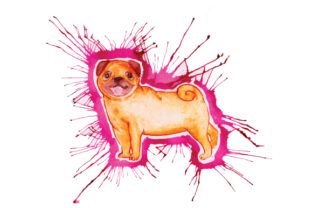
Dog in Paint Splatter Watercolor Style
I have reviewed hundreds of machine embroidery design files over the years, and every so often a design lands on my screen that makes me stop and think about all the ways it could actually work in a real handmade product lineup. The Dog in Paint Splatter Watercolor Style design is one of those files. It is not a standard flat cartoon dog. It is not a basic silhouette. It carries a loose, artistic energy that feels more like a brushstroke painting than a typical embroidery pattern, and that changes how I would approach it in a project.
My first impression is that this design reads like a piece of modern pet art. The paint splatter effect gives it movement, and the watercolor style softens the lines, which makes the whole composition feel expressive rather than rigid. If you are an Etsy seller or a small shop owner who wants to offer something that does not look like every other dog embroidery on the market, this file has a genuine edge. It belongs in a store that sells boutique pet products, not mass-produced blanks.
What the Design Communicates Before a Single Stitch
When I evaluate a digital embroidery file, I always ask what mood it creates. This one feels playful and a little sentimental. The splatter detail suggests an active, messy, joyful dog, the kind of pet that leaves paw prints everywhere and makes people laugh. The watercolor effect softens the overall look, which makes it suitable for both bold statement pieces and softer, more personal items. It would read beautifully on a tote bag design meant for a dog lover, or on a sweatshirt embroidery project where the wearer wants something artistic rather than cute.
Visually, the composition does not rely on heavy outlines, which is an important observation for embroidery. Watercolor styles in digitized form often lean on fill stitch variations and subtle color blending rather than thick satin stitch borders. If the digitizing is done well, the finished stitch-out will look painterly. If it is not, the transitions between colors could feel choppy. I always recommend testing the stitch density on a scrap fabric before committing to a final product, especially with designs that depend on soft transitions.
Where This Design Naturally Belongs
I can already picture the Dog in Paint Splatter Watercolor Style design on a canvas tote bag. A few weeks ago, I was preparing a small batch of custom embroidered totes for a local pet boutique order. The shop owner wanted something that felt handmade and artistic, not clip-art stiff. If I had this file at the time, it would have been the first one I showed her. The splatter effect would give the bag a studio-artist feel, and the dog silhouette would make it instantly recognizable to pet owners.
Beyond tote bags, this design fits well in several other embroidery project categories:
- Custom apparel like sweatshirts, denim jackets, and casual t-shirts
- Handmade product lines including pillow covers and tea towels
- Baby embroidery items such as nursery blankets or soft wall hangings
- Holiday embroidery gifts, especially for dog-loving family members
- Embroidered patch applications for backpacks or caps
- Small shop product displays at craft fairs and pop-up markets
The design would also work well as a printable mockup element for digital product sellers who need to showcase their embroidery work online. The watercolor style photographs nicely, and the paint splatter detail catches the eye in a thumbnail, which matters a lot for craft business owners selling on platforms where visual scroll-stopping power is everything.
Thinking Through Fabric and Placement Challenges
Not every design works everywhere, and the Dog in Paint Splatter Watercolor Style file requires some thoughtful placement decisions. Because the paint splatter effect likely includes scattered dots and irregular edges, I would be cautious about using this on highly textured fabrics like thick terry cloth or heavily napped fleece. The splatter details could lose definition and look muddy rather than crisp.
Small hoop sizes are another consideration. If the splatter elements are too fine, a small hoop might force the stitch density into a tight area, which could cause puckering or thread breaks. I would test the design at the intended size and also one size down to see how the details hold up. Thin fabrics like lightweight jersey or sheer cotton need extra stabilizer support, especially under a design with varied stitch types and scattered elements.
Dark fabric is a double-edged sword for this design. On one hand, the paint splatter could pop beautifully against a black or charcoal background. On the other hand, if the watercolor sections use light, translucent thread colors, they might wash out or lose contrast. I always check thread colors against both light and dark fabric swatches before running a final stitch-out. A quick black-and-white mockup helps me see whether the values hold up without color distraction.
Curved surfaces like caps and hats are trickier. The splatter pattern might not align cleanly on a structured cap front, especially if the design spans a wide area. I would consider centering the dog silhouette on a cap and letting the splatter taper off toward the edges, but I would test it on a practice cap first. No one wants a crooked splatter on a finished product.
How the Design Affects Product Value and Customer Trust
One thing I have learned from years of selling finished product items is that customers notice when a design looks intentional. The Dog in Paint Splatter Watercolor Style design has a strong artistic identity, and that translates directly into higher perceived value. A sweatshirt with a generic dog outline might sell for twenty dollars. The same sweatshirt with this watercolor splatter design could sell for thirty-five or more, simply because it looks like a curated piece of art rather than a basic applique.
Buyer engagement also improves when the design tells a story. Dog owners see this design and immediately connect it to their own pet's messy, joyful personality. That emotional reaction builds trust and makes the purchase feel personal. For Etsy seller listings, I would definitely include close-up photos of the splatter detail and at least one lifestyle shot showing the design on a finished item, like a tote bag hanging on a hook or a pillow cover on a cozy chair.
Brand consistency is another factor. If your shop already carries a line of watercolor-style or paint-splatter design assets, this file fits right in. If your brand is more traditional or rustic, the design might feel like a departure, but it could also be the piece that expands your audience into a younger, art-appreciating customer base.
Practical Embroidery Designer Notes
Before I stitch any design for a client or a product listing, I run through a mental checklist. Here is what I would do with the Dog in Paint Splatter Watercolor Style file:
- Test the design on medium-weight cotton first, using a cutaway stabilizer to prevent shifting during the splatter sections.
- Check stitch density in the watercolor areas. If the fill feels too dense, I may adjust the design file settings before stitching.
- Review the thread colors against the intended fabric. I would likely use a slightly darker thread for the splatter dots to ensure they read clearly.
- Confirm the hoop size matches the design dimensions. If the file includes multiple sizes, I would test the smallest and largest to understand the scaling behavior.
- Inspect small details like the edges of the paint splatter. Loose running stitch elements can snag, so I would look for any areas that need reinforcement.
- Stitch a sample on a dark fabric and a light fabric to compare contrast and visibility.
- Check the licensing terms before using the design on commercial embroidery products. The product description mentions SVG, PNG, EPS, and DXF formats, which is helpful for mockups and design editing, but I would confirm whether the license covers finished physical items for sale.
Real-Life Scenario: A Custom Sweatshirt Order
Let me walk through a real scenario. A customer contacts me asking for a personalized gift for her sister who just adopted a rescue dog. She wants a cozy sweatshirt with a dog design that feels artistic and unique, something that does not scream mass production. I immediately think of the Dog in Paint Splatter Watercolor Style design.
I would stitch it on a soft heather gray sweatshirt, positioning the design slightly off-center on the chest for a modern, gallery-style placement. The paint splatter would extend naturally across the fabric, and the watercolor blending would soften the overall look so it feels wearable and not stiff. I would use a medium-weight fusible stabilizer and float a layer of water-soluble topping to keep the splatter details crisp on the fleece texture.
The customer would open the package and see a handmade product that looks like it came from a high-end boutique, not a hobby craft corner. That is the power of choosing a design with genuine artistic quality. It elevates the entire project and makes the gift feel significant.
File Formats and Workflow Flexibility
The product description states that the design comes in SVG, transparent PNG, EPS, and DXF formats. For embroidery purposes, I would need to confirm whether a stitch file format is included or if the design requires digitizing from the vector artwork. The SVG and EPS files are excellent for creating printable mockup images, designing product listings, or editing the artwork in vector software before digitizing. The transparent PNG is useful for quick previews and layering over product photos.
If I were using this as a digital embroidery file for machine stitching, I would check the listing details to see if formats like PES, DST, or JEF are available. If not, I would plan to have the design professionally digitized from the vector artwork, which gives me control over stitch density, pull compensation, and color sequencing.
Final Thoughts Before You Stitch
The Dog in Paint Splatter Watercolor Style design is a strong choice for makers who want to offer something with personality. It fits the Animals category beautifully and brings a fresh, artistic angle to Crafts that rely on pet-themed merchandise. The watercolor and splatter combination is not something you see in every embroidery shop, and that scarcity adds value.
Take your time with the test stitch. Pay attention to how the splatter reads at different sizes. Consider your fabric choices carefully. And when you list the finished product, lead with the artistry. Customers who love their dogs will respond to a design that captures the joyful, slightly chaotic spirit of a real pet. This file delivers that in a way that feels thoughtful and original, and that is exactly what I look for when I choose a design for my own projects.